Reading Sonar Shadows: Identify Fish and Structure Like a Pro
One of the most powerful yet overlooked tools in sonar fishing is the shadow cast by fish and structure. Shadows reveal the size, depth, and location of fish or objects in the water, giving anglers a huge advantage.
In this guide, you’ll learn:
What sonar shadows are and why they appear
How to interpret shadows to identify fish, weeds, and structure
Side Imaging and Down Imaging techniques for shadow reading
Common beginner mistakes when reading sonar shadows
By mastering sonar shadows, you can quickly distinguish fish from vegetation, locate suspended fish, and target underwater structures with precision.
SECTION: WHAT ARE SONAR SHADOWS?
A sonar shadow appears when an object blocks the sonar signal, creating a dark area behind it on your screen. Shadows help determine:
Size: Bigger objects cast larger shadows
Distance from bottom: Fish suspended above bottom cast shadows on the structure or weeds below
Shape of structure: Logs, rocks, and ledges cast shadows that reveal contours
Link:
How to read sonar → full guide on reading sonar
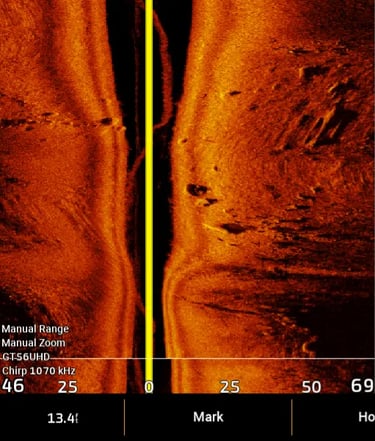
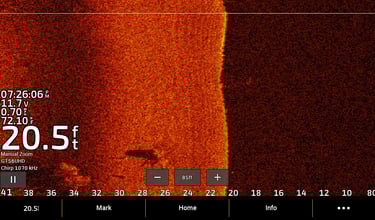
Shadow cast by fish above a rock structure on Side Imaging sonar
SECTION: FISH SHADOWS
Fish often cast shadows on Side Imaging and Down Imaging sonar:
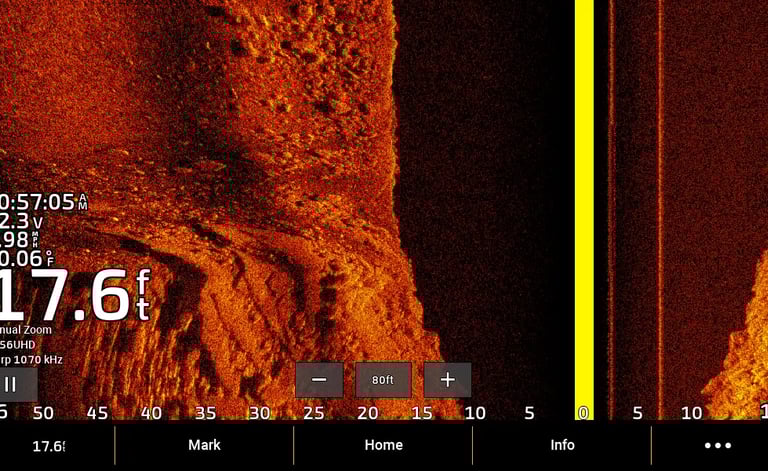
Suspended fish appear as small targets with dark shadows beneath them
Shadows reveal fish size — larger shadows usually indicate larger fish
Observe the movement of shadows along structures or weed edges to locate schools
Pro Tip: Confirm targets with 2D / CHIRP sonar for accurate depth and size estimation.
Links:
Fish vs structure vs fish → distinguishing fish from weeds
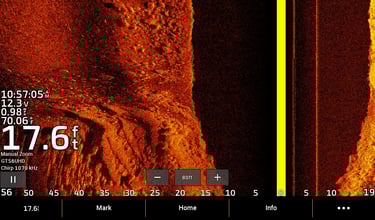
Fish shadow on side imaging (left)
SECTION: STRUCTURE AND VEGETATION SHADOWS
Shadows are not just for fish — they also reveal underwater structure and vegetation:
Structure: Logs, rocks, and ledges cast consistent shadows showing height and contour
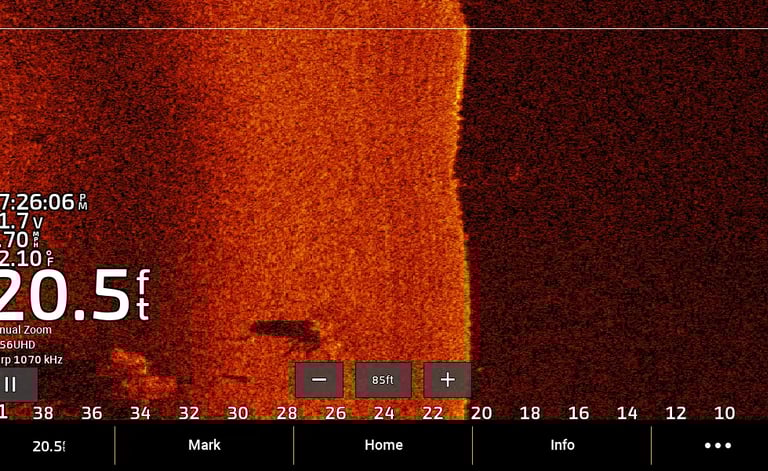
Weeds / vegetation: Cast irregular or fuzzy shadows; fish often suspend near edges
Shadows make it easier to distinguish fish from non-fish objects
Links:
Brush and fish shadow on side imaging.
SECTION: OPTIMAL SHADOW SETTINGS
To read shadows effectively, your sonar settings matter:
Contrast / Brightness: Moderate — too high or low can hide shadows
Range: Set appropriately for the depth of target fish or structure
Boat speed: 3–5 mph for Side Imaging to get clear shadows
Frequency: Standard 455 kHz for Side Imaging; 800 kHz for Down Imaging in shallow water
Link:
Beginner sonar settings → for beginner setup guide
SECTION: COMMON MISTAKES WITH SHADOWS
Avoid these common mistakes:
Misreading weeds as fish → check for shadows and structure
Ignoring shadows → shadows provide size, depth, and position info
Excessive gain → creates clutter that hides shadows
Too fast → boat speed can blur shadows and make fish harder to detect