What Do Fish Look Like on Sonar? Arches, Dots, and Lines Explained
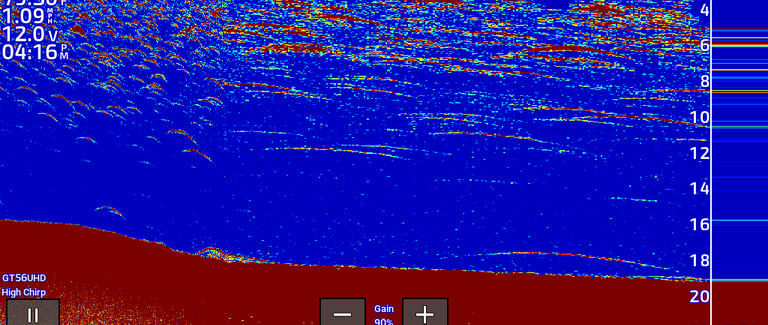
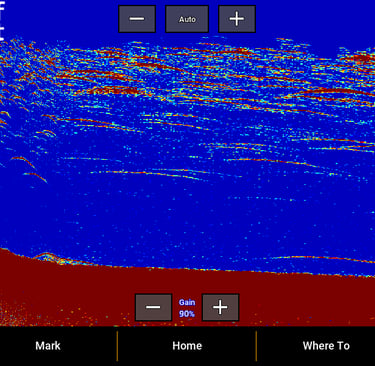
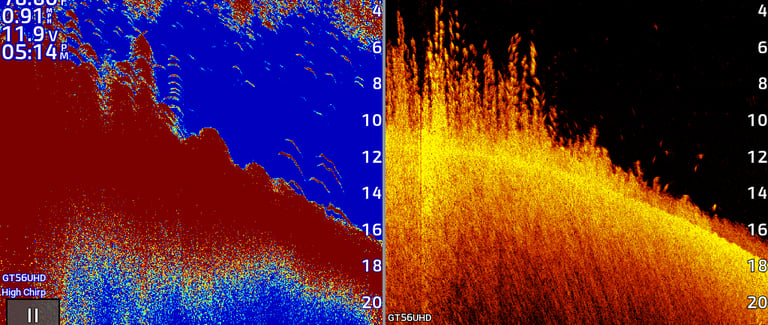
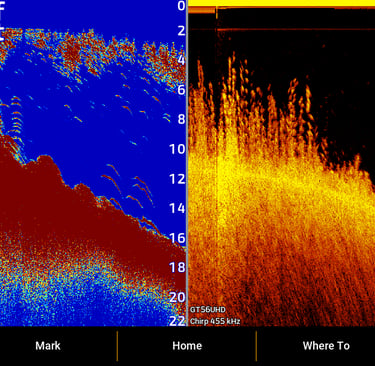
When you look at a fish finder screen, fish do not usually look like actual fish. Instead, they appear as arches, dots, or lines. These shapes are created by how fish move through the sonar signal, not by their exact body shape
Fish Arches
Arches are the most common fish shape on traditional sonar.
A fish appears as an arch because:
The fish enters the edge of the sonar cone
Moves through the center of the cone
Then exits on the other side
The strongest sonar return happens when the fish is directly under the transducer, creating the top of the arch.
Full arch = fish passed through the center of the cone
Half arch = fish passed through the edge
Thick arch = larger or stronger-return fish
Fish Dots
Fish appear as dots or short marks when:
The fish is not moving much
The boat is moving slowly
The fish only stays in the sonar cone briefly
Small dots often indicate small fish, while larger dots usually mean bigger fish or tighter schools.
Fish Lines
Fish show up as horizontal or slanted lines when:
The fish is moving steadily at one depth
The boat is stationary (like while jigging)
Fish are swimming directly under the transducer
These lines are common during vertical fishing or when fish are holding close to structure.
Why Fish Look Different on Sonar
Fish shapes change because of:
Boat speed
Fish movement
Sonar cone angle
Sensitivity settings
The sonar shows movement over time, not a snapshot image.
Final Tip
Not every mark is a fish, but learning these shapes makes sonar much easier to understand. With practice, arches, dots, and lines will quickly start to make sense.